Game · 2023
Little Dino Adventure
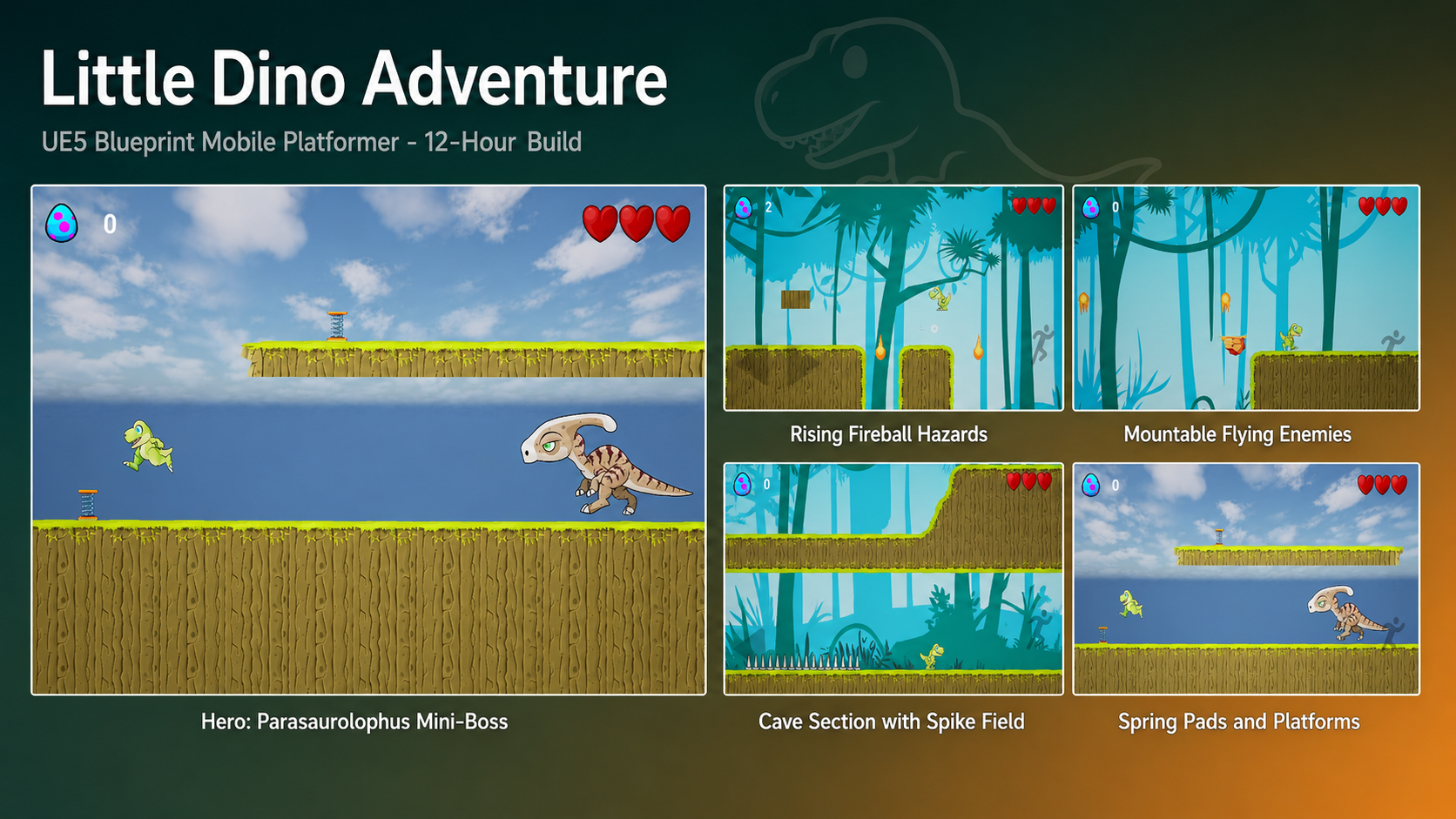
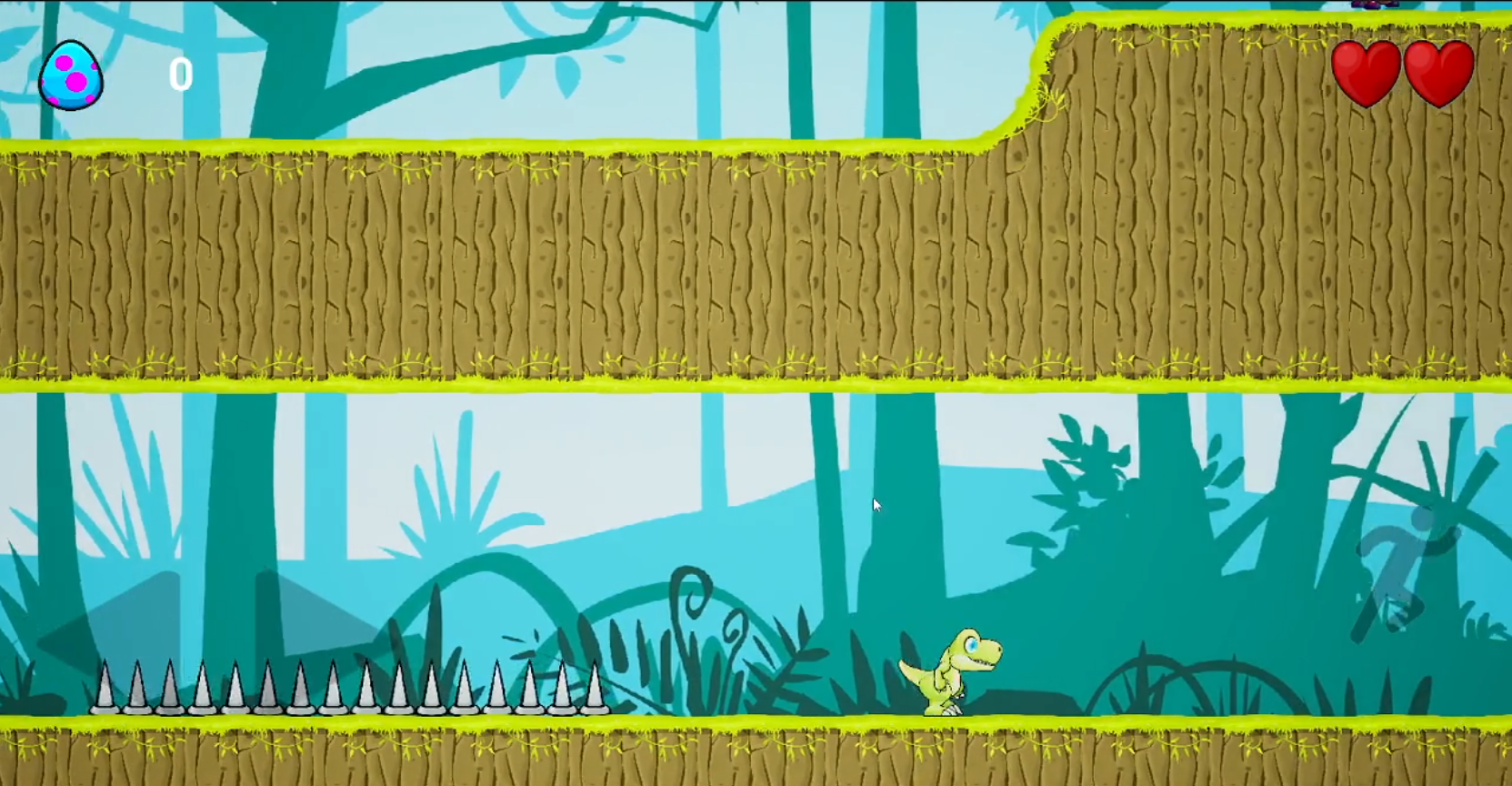
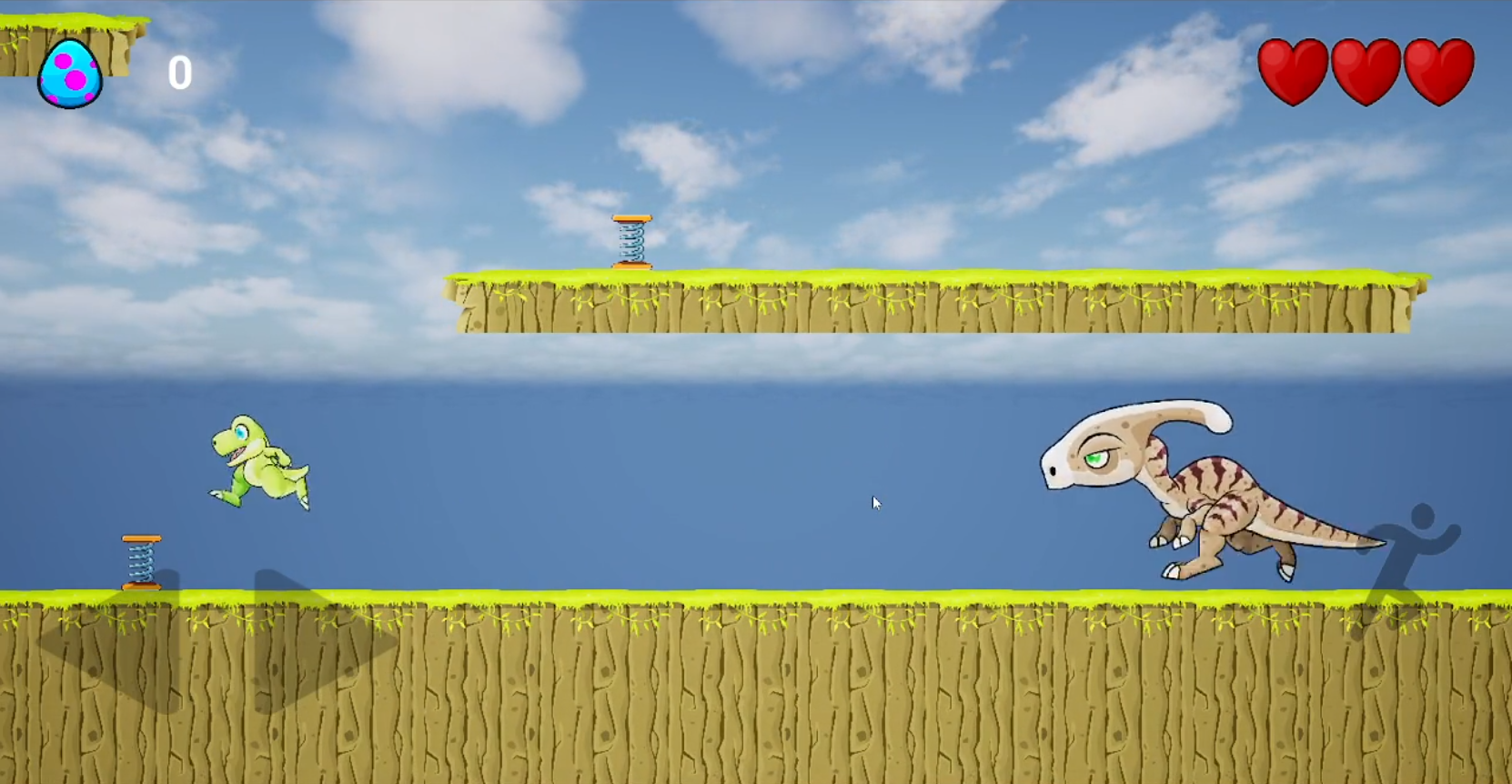
A 2D mobile platformer built in Unreal Engine 5 with Blueprints, in twelve hours. A fireball-spitting dino runs through jungle, caves, and floating sky islands, dodging erupting fire, riding flying enemies, and facing off against a mini-boss.
Little Dino Adventure is a side-scrolling platformer that punches well above its twelve-hour build time. The dino runs and jumps through multiple distinct environments. Jungle canopy, cave interiors with overhead ceilings, and ocean-floating sky islands, across level layouts that vary from flat runs to vertical pillar-hopping to sloped hillsides.
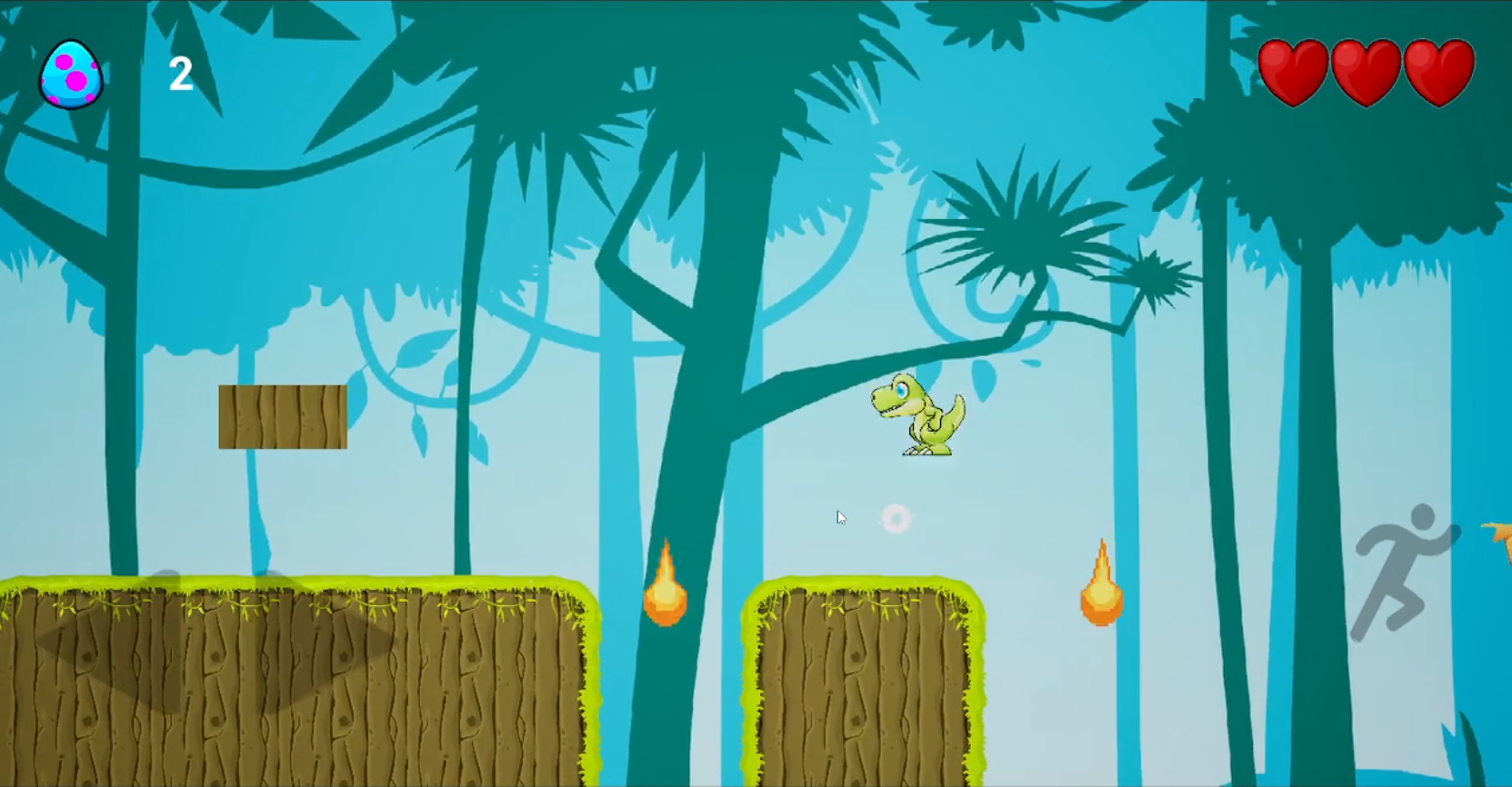
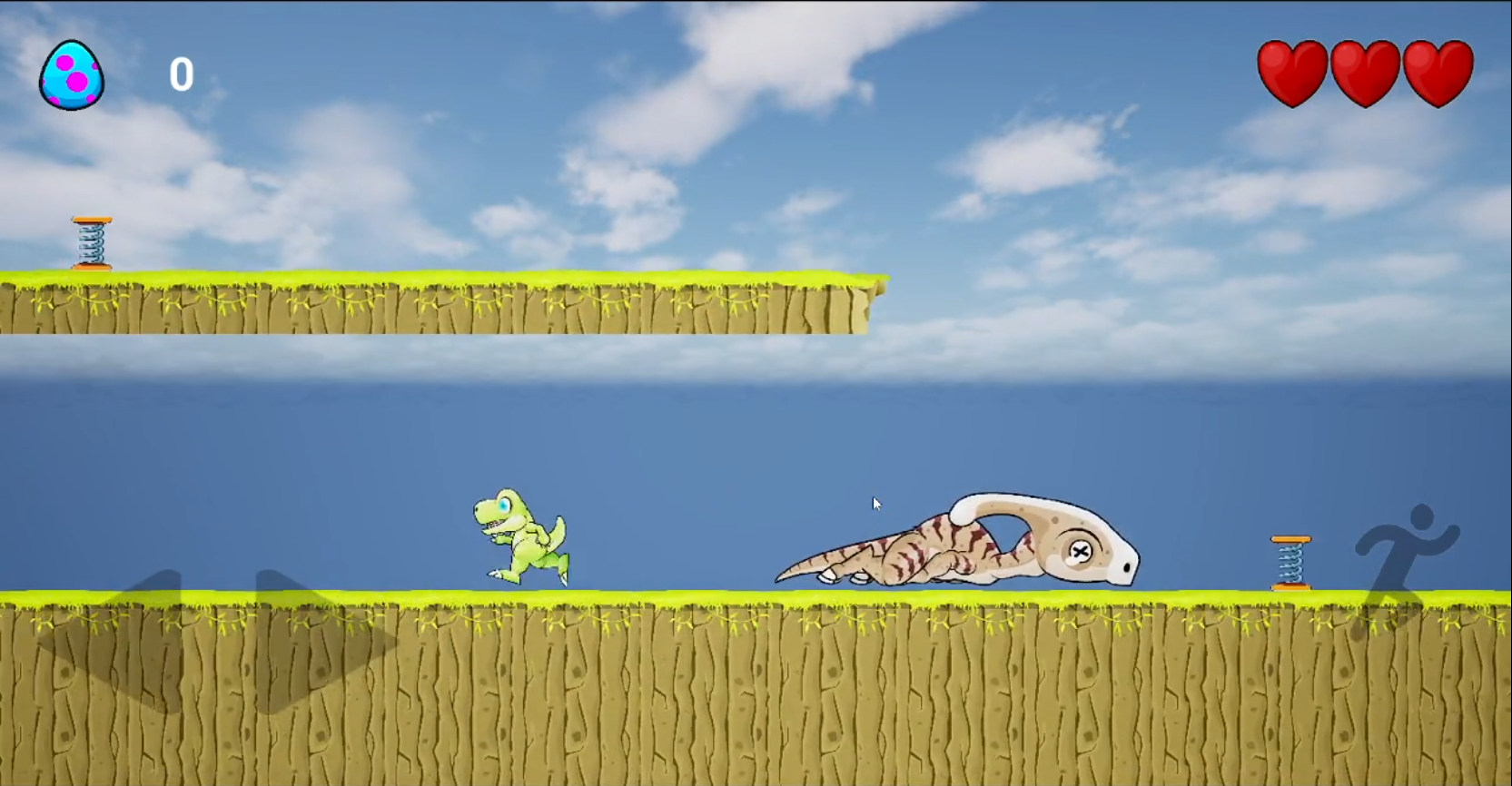
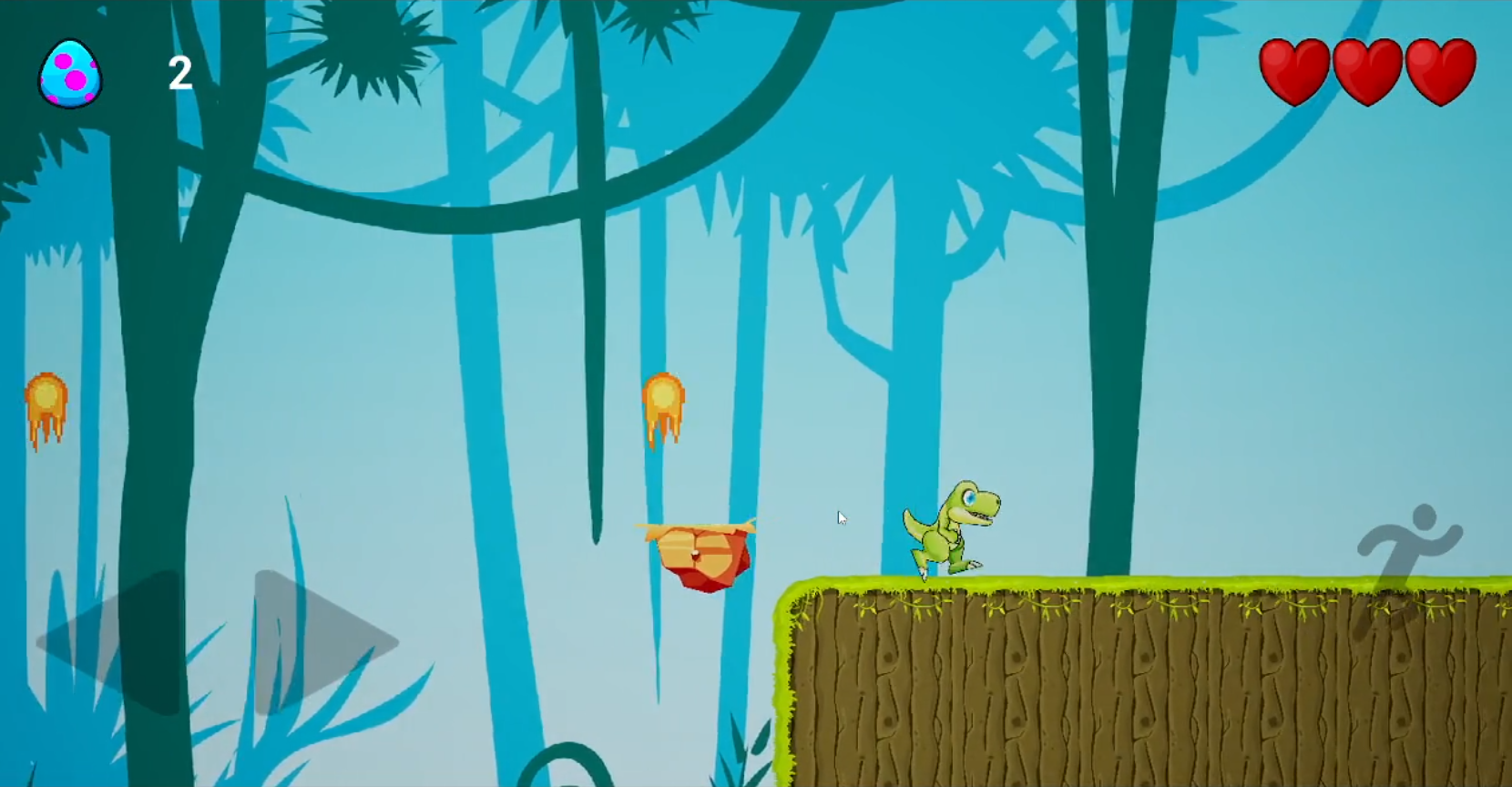
The mechanics are denser than the cute art suggests. The dino has a fireball attack, firing projectiles to clear enemies. Rising fireballs erupt from the ground at fixed positions, oscillating up and down as timing hazards. Flying enemies double as mountable moving platforms, the player can ride them across gaps. Long spike fields demand precise jumps, spring pads fling the dino skyward, and Mario-style question blocks drop hearts, eggs, or nothing depending on the roll. There's a three-heart health system, egg collectibles, damage feedback with impact stars on every hit, and a parasaurolophus mini-boss with a proper defeat animation. Three dino characters are selectable from a polished, framed wood-and-vines menu screen.
The whole thing targets mobile, with an on-screen joypad, run button, and fireball trigger baked into the HUD, and health and currency positioned in the corners where thumbs don't reach.
Key challenges
The real challenge was scope management under a hard time constraint. Twelve hours is brutally short for a platformer with combat, hazards, a mini-boss, multiple biomes, and three characters, so every system had to be ruthlessly prioritised, built lean, and made to feel good rather than be feature-complete. The technique was leaning hard on Unreal's 2D side-scroller backbone and pouring the saved time into game feel: animations that read instantly even at thumbnail size, hit reactions that sell every interaction, and platform geometry varied enough that no two screens feel identical. The discipline of wiring the touch-control overlay in during the very first hour rather than retrofitting it at the end, is what let the rest of the systems be built mobile-ready from the start instead of being ported afterward.