Game · 2023
Ring Game Poker Template
A fully replicated multiplayer ring-game poker template for Unreal Engine Blueprints, published on the FAB marketplace. Supports both dedicated and listen servers, configurable entirely through data assets, with ring-game-specific features most poker templates skip.
Ring Game Poker is a complete client-server poker product built in UE Blueprints and published as a marketplace template. It is fully network-replicated and supports both dedicated and listen-server topologies, with nearly everything configurable through data assets rather than code. It's the most technically advanced module of Teddy's Pokerclub bundle, broken out as its own listing because it stands on its own; it ships both standalone and as part of that bundle.
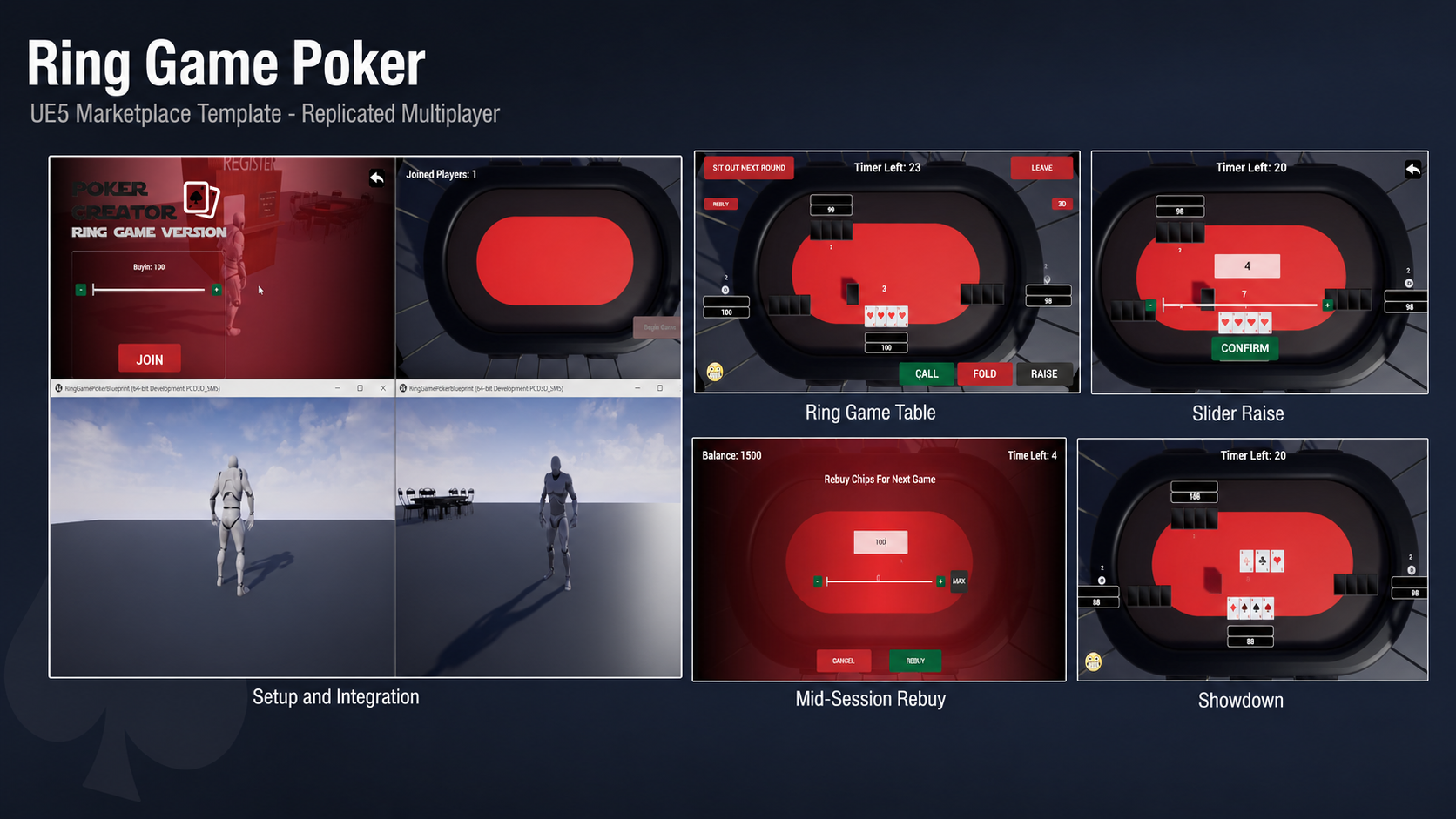
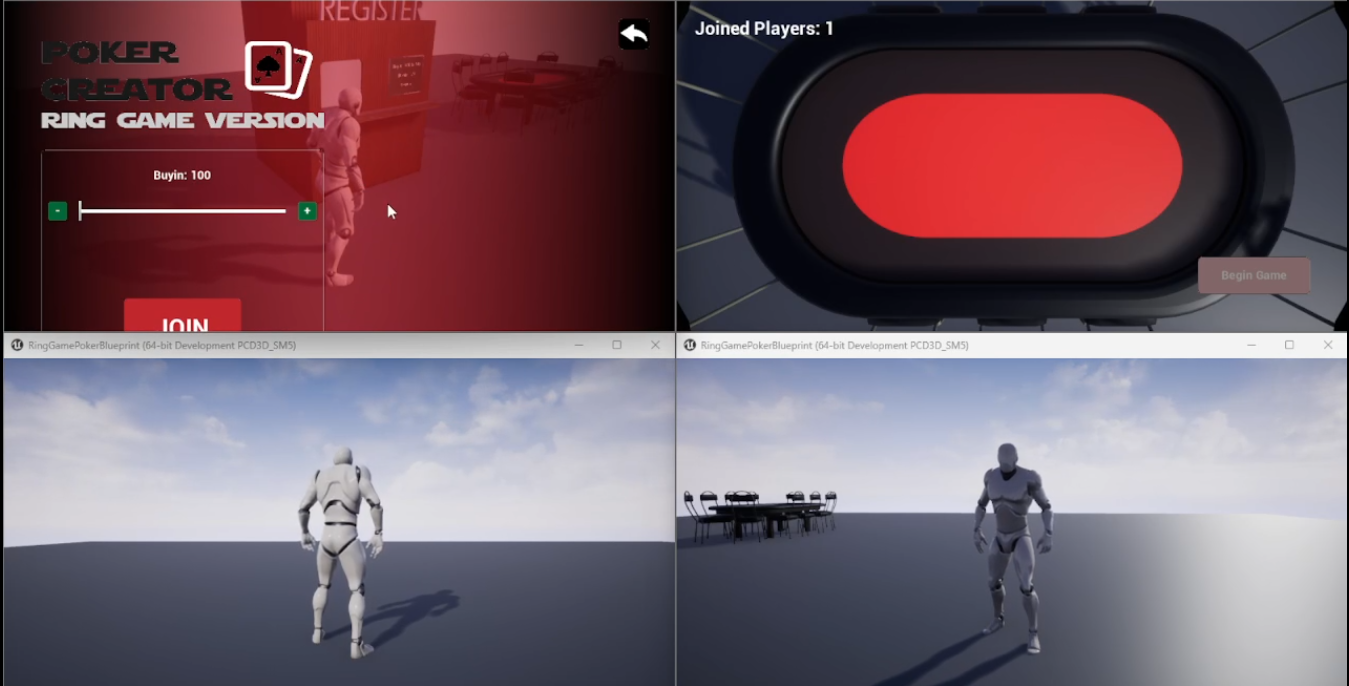
The architecture is two-map by default: a lobby map handles session creation and joining through a session finder widget blueprint, and a game map where a poker table actor class owns the entire poker state machine and all replication. Card spawn, deck, burn, and per-seat hand positions are exposed as scene-component target transforms, so dealing and showdown animations are content-driven rather than hard-coded.
Customization runs through data assets. DA_PokerVersion_DataAsset holds level names, card textures, blinds, and server mode. DT_PokerVariationPresets defines poker variants through three fields, cards dealt per player, required cards in the final combo, and whether that count is absolute, so Hold'em, Omaha, and custom variants are rows in a data table rather than code branches. Custom character integration is one component plus an interface: drop AC_PokerEventBinder_ActorComponent onto any pawn and implement BPI_PokerEventBinder_Interface. Buy-in and username persist through a SaveGame object.
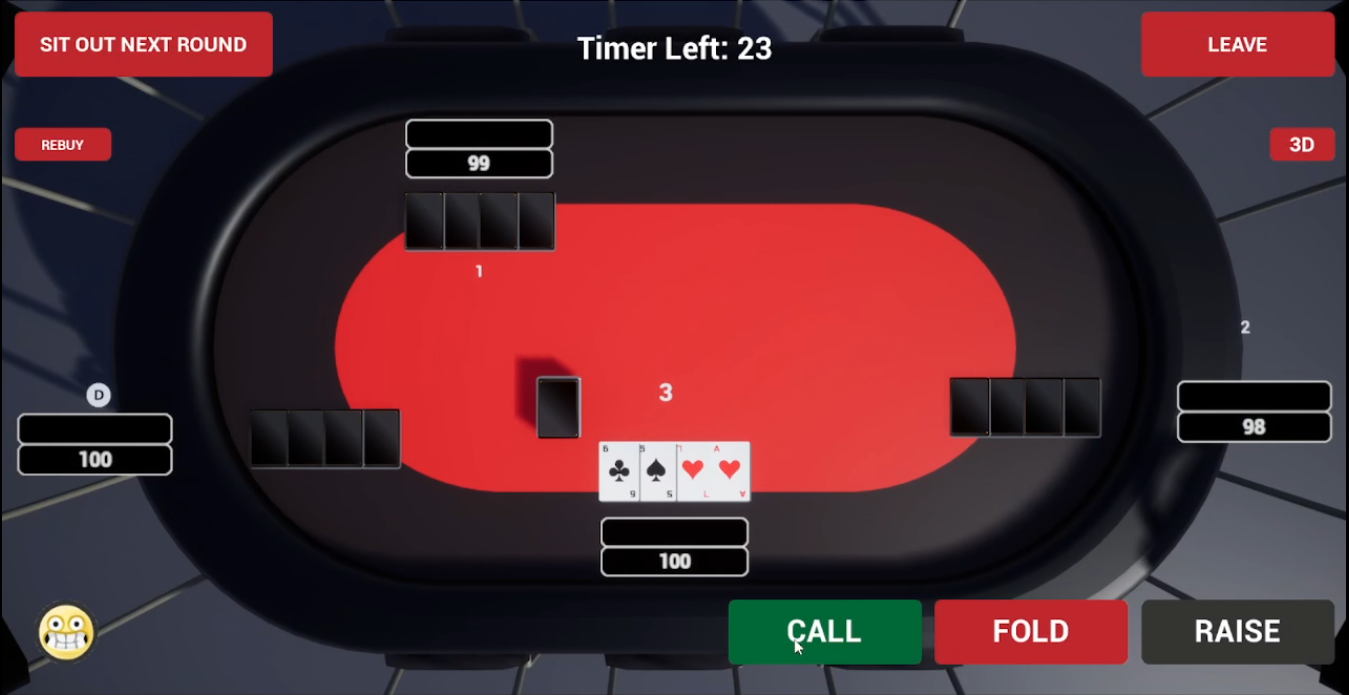
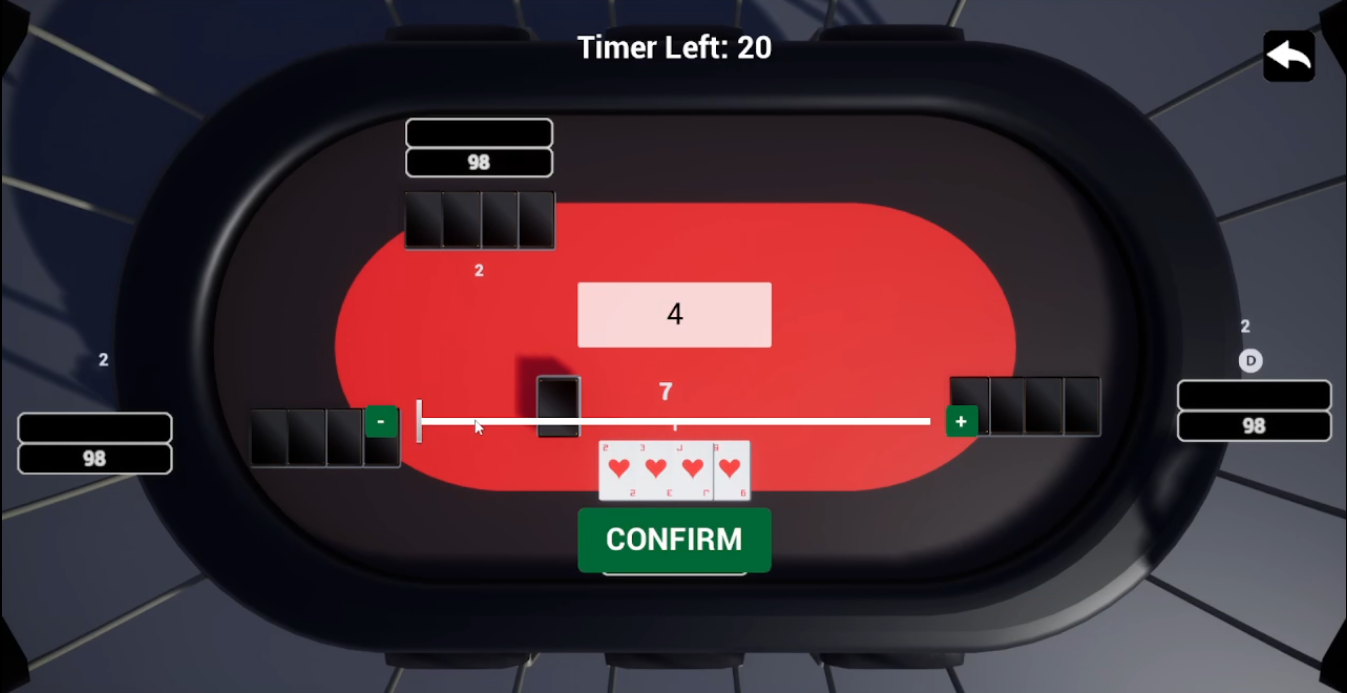
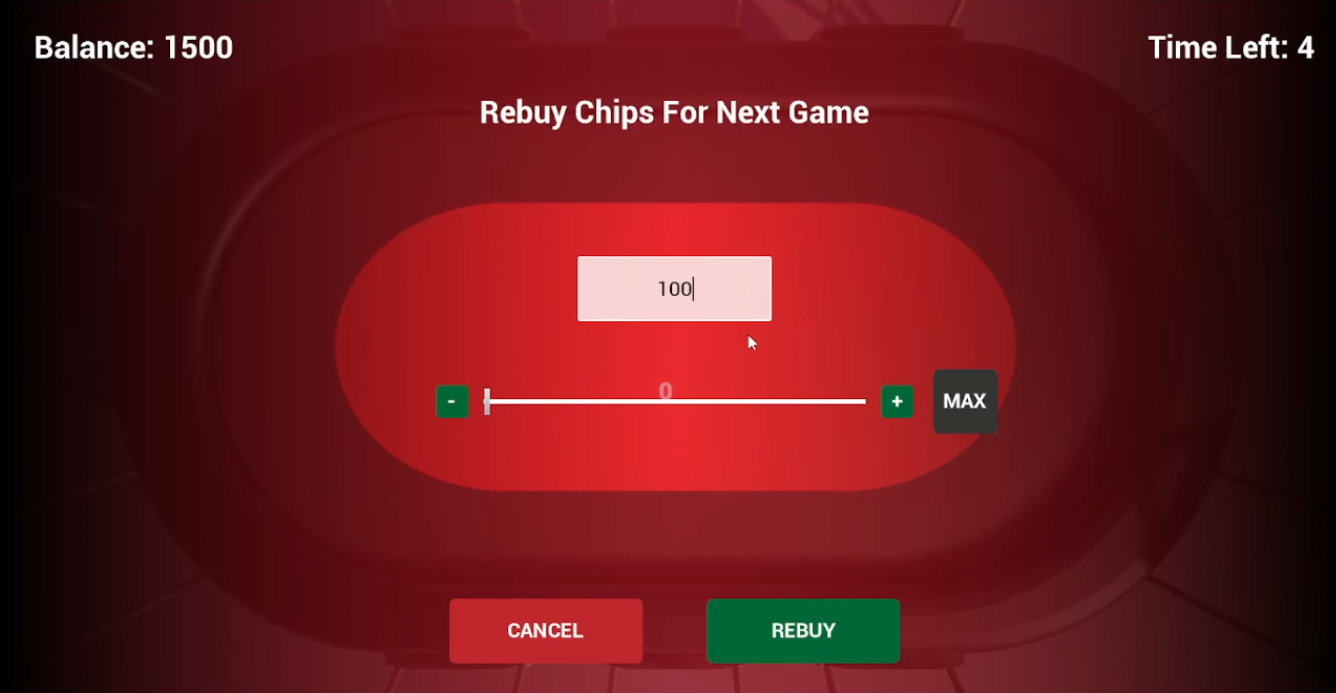
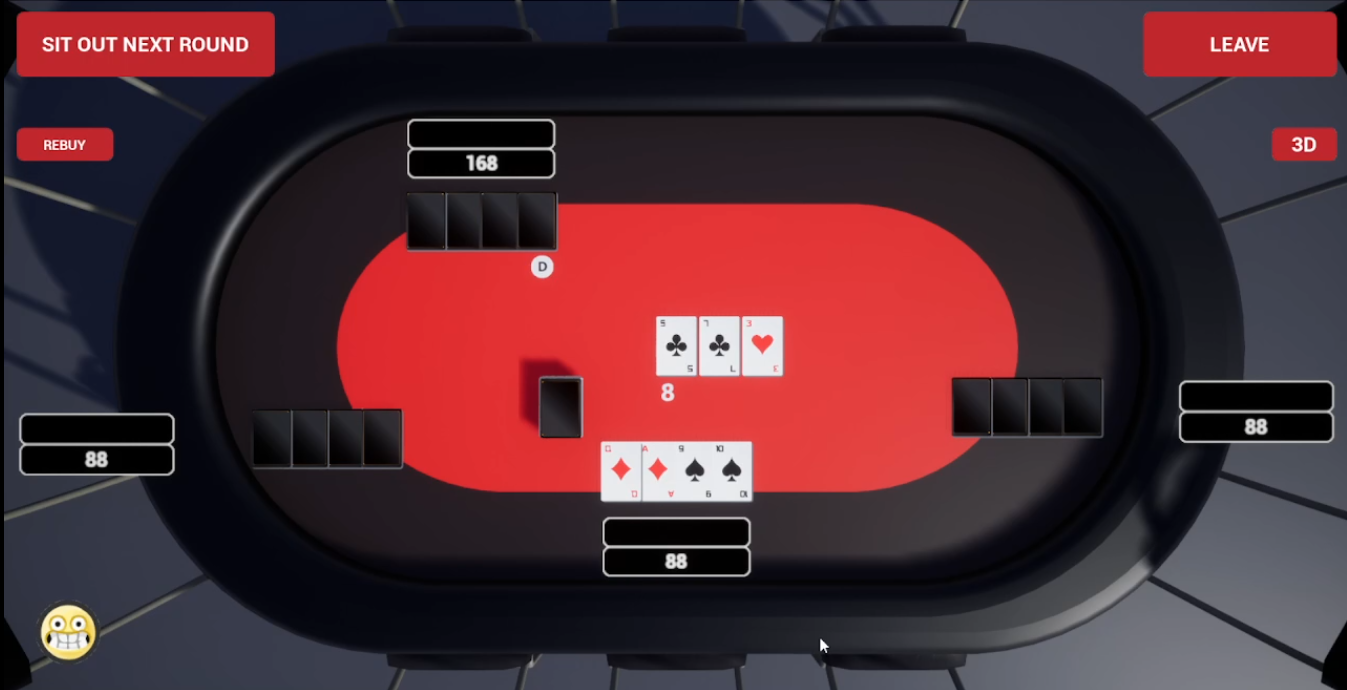
Both server topologies are genuinely supported: listen-server uses standard session create/join, while dedicated server uses ServerTravel/Travel for single-map deployment, with an external server-manager pattern documented for multi-session hosting. A 2D top-down view and a 3D camera view are both built in and switchable mid-game. What sets it apart from typical poker templates is the ring-game-specific feature set: sit-out-next-round, mid-session rebuy, dealer rotation, a per-turn timer, emoji reactions, and a slider-based raise UI.
Key challenges
Correct multiplayer poker state, not just networked. A poker table is a complex synchronized state machine. Turn order, betting rounds, side pots, dealer rotation, players sitting out and rebuying mid-session, all of which must stay consistent across every client. Getting that replicated correctly (rather than "technically multiplayer but desyncs under edge cases") was the core engineering effort.
Variant rules as data, not code. The temptation in a poker template is to branch on game type. Instead, the three-field variation preset captures the actual structural difference between Hold'em and Omaha as data, so adding a new variant is a data-table row, a far more valuable thing to sell.
Genuine dedicated-server support. Many marketplace poker templates claim dedicated-server support but only really handle listen servers. Supporting true dedicated deployment, including the ServerTravel single-map path and documenting the external manager pattern for multi-session hosting, was a deliberate effort to make the template actually deployable rather than nominally compatible.